Real Garage Scenarios Where an Autel Scan Tool Saves Time
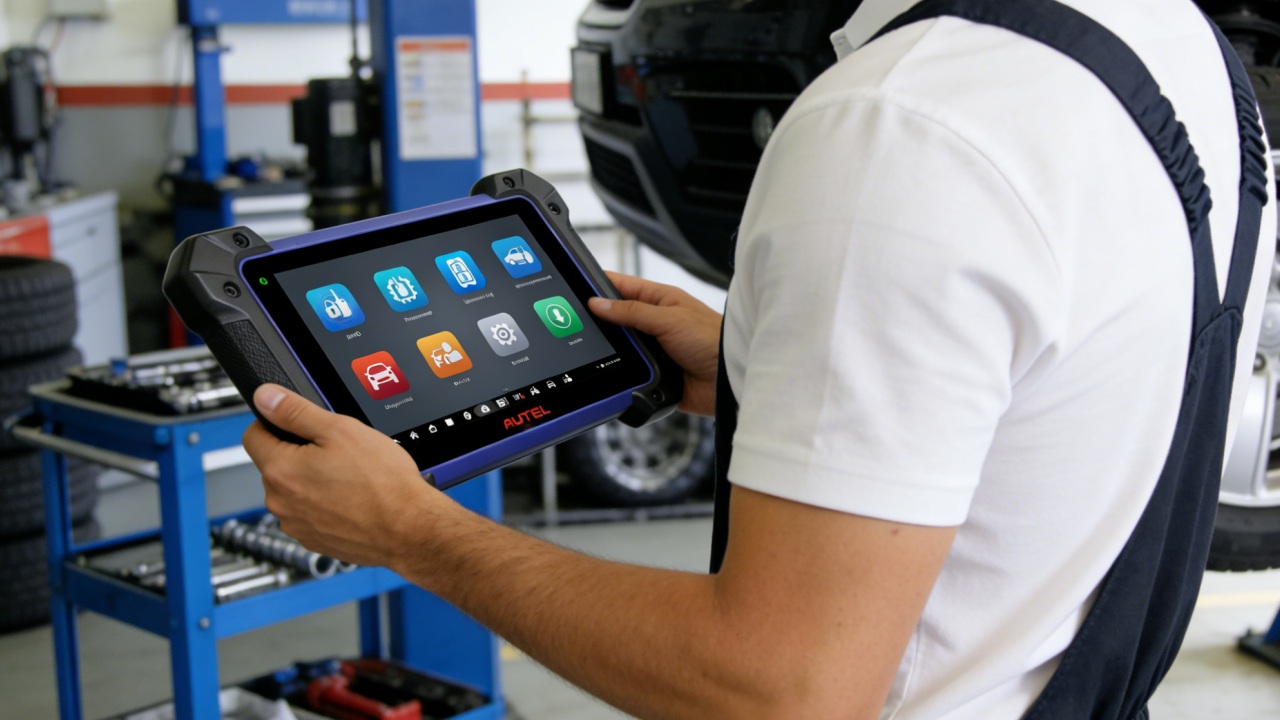
Work in a garage rarely follows a clean pattern. Cars arrive with unclear complaints, mixed warning lights, or issues that come and go. In that setting, an autel scan tool is primarily used to shorten the time between symptoms and causes. It does this by pulling system data directly from the car instead of relying on guesswork or step-by-step part swapping. The time savings are not abstract. They show up in daily tasks like faster fault checks, quicker resets, and clearer component testing while the car is still on the lift.
Quick Start With Full System Scan
One common delay in garages is starting the diagnostics on a per-system basis. A full scan changes that. The tool checks all modules in one pass, showing stored and active faults across the engine, transmission, ABS, and other systems. Instead of testing each area manually, the technician receives a complete fault list within minutes. Tools like the Autel MaxiIM IM608 II are often used in this stage for faster initial reads.
When the Car Has Multiple Warning Lights
Cars often arrive with several dashboard warnings at once. Without a scan tool, it is unclear if they are linked or separate issues. A diagnostic scan groups faults by system and shows which one triggered others. This helps avoid replacing unrelated parts. The result is fewer repeat checks and less time spent reopening the same case.
Engine Misfire Checks
Misfires are often misdiagnosed when only basic tools are used. A scan tool shows which cylinder is affected and whether the issue is due to fuel, spark, or air imbalance. Live data helps confirm the issue while the engine runs. That removes the need for repeated physical inspections and short test drives.
ABS Fault Tracing
Typically, ABS problems are from a sensor, wiring, or wheel speed signal. If there is no scan data, it can take a long time because each wheel must be tested manually. With a scan tool, each sensor reading is shown in real time. When a wheel signal is faulty, it is immediately apparent, reducing the number of steps required to make a diagnosis.
Live Data During Road Test
Some faults don’t show when the car is at a standstill. Some faults only display when the vehicle is in motion. The scan tool with live data is useful for recording engine load, speed signals, and temperature changes during a road test. The technician is not repeating the drive several times but rather is reviewing the stored data after one drive. This will minimize trial-and-error driving cycles.
Fast Reset After Repairs
Typically, systems must be reset after parts are replaced. This comprises oil service reminders, steering angle calibration, and battery registration. If these steps are taken manually, without a tool, they may be more time-consuming or involve additional dealer visits. Resets are performed with a scan tool in a single session and as part of the vehicle’s departure from the workshop.
Active Tests for Components
Active testing enables parts such as fuel pumps, fans, and valves to be tested directly. The system triggers instead of trying to guess whether a part works, based on the scan tool. For instance, a cooling fan may be activated by commands rather than waiting for the engine temperature to go up. This shortens fault confirmation time.
Wiring vs Sensor Confusion Cases
A common garage problem is determining whether a fault is due to wiring or a failed sensor. Scan data helps separate the two by checking signal response patterns. If the signal is unstable but present, wiring may be the issue. If there is no response, the sensor is more likely to be faulty. This reduces unnecessary part replacement.
ECU Communication Problems
Some vehicles show faults due to poor communication between modules. A scan tool identifies which module is not responding and whether the issue is network-related. This avoids checking each ECU individually. Instead, the faulty link is located early in the process.
Used Car Inspection Work
In used car checks, time matters because multiple vehicles are inspected in a short period. A scan tool quickly lists hidden faults that are not shown on the dashboard. This allows faster decisions during purchase checks or resale preparation. One scan often replaces multiple manual inspections.
Battery and Charging System Checks
Battery problems are common, though the battery itself may not be the cause. It may result from low alternator output and voltage drop. A scan tool shows charging values and system stability while the engine runs. This avoids repeated battery swaps when the real issue lies elsewhere.
Workshop Flow Between Jobs
In busy garages, time is often lost switching between cars and redoing setup steps. Quick scans, saved reports, and stored vehicle data reduce the time required for repeat setup. Technicians can move from one job to another without having to rebuild the diagnostic context from scratch.
Conclusion
Across common garage situations, scan tools reduce time spent on repeated checks, unclear faults, and manual testing. The main gain is not just speed, but fewer unnecessary steps between problem and repair decision.